
“We see family as more of a constellation. Family stretches across continents and generations from grandparents to parents to ourselves and our babies.” For Dr. Sharon Dorcoo, family is more than the people living under one roof. It is the connections, traditions, and relationships that bring people together, even when they live thousands of miles apart.
As part of the Black Families Flourishing’s (BFF) Spotlight Connections series, we sat down with Dr. Dorcoo to learn more about her family and what flourishing means to her. Our family spotlights celebrate the experiences and strengths of Black families, highlighting the many ways families support one another and how family legacies contribute to well-being.
Originally from Ghana, Dr. Dorcoo moved to the United States at age 16. Today, she lives in Huntsville, Alabama, with her husband and their three children. Her experiences growing up in Ghana, navigating life as a Black immigrant, and raising children in the United States have shaped how she thinks about family, identity, and the future she hopes to create for the next generation. We spoke with Dr. Dorcoo on a video call, and the following post reflects what she shared.
Family and the Importance of Staying Connected
Growing up in Ghana, Dr. Dorcoo lived in a multigenerational home surrounded by her grandparents, cousins, and extended family. These relationships helped shape her understanding of family and gave her a strong sense of belonging. Today, her family stretches across generations and continents. Although she and her husband are raising their children in the United States, they remain connected to loved ones in Ghana. She also considers the Black women, immigrant friends, and communities who have supported her throughout her life an important part of her extended family.
For Dr. Dorcoo, these relationships are also a connection to the generations who came before her. She reflected on the sacrifices, prayers, and hard work of previous generations that helped make her life possible. These connections are especially meaningful as she raises her children and works to pass down the traditions and values that shaped her own childhood.
What Does Flourishing Look Like?
When we asked what flourishing looks like for her family, Dr. Dorcoo talked about the importance of everyday experiences that keep her connected to her culture. Cooking traditional Ghanaian meals, speaking different languages, and sharing family stories allow her to maintain a connection to her childhood while introducing her children to their heritage.
She also spoke about taking her children to Ghana to visit extended family. During their most recent trip, her children enjoyed being there so much that they did not want to return to the United States. For Dr. Dorcoo, these visits are an opportunity for her children to experience their family’s culture firsthand. They also offer a sense of comfort and belonging that can be difficult to put into words.
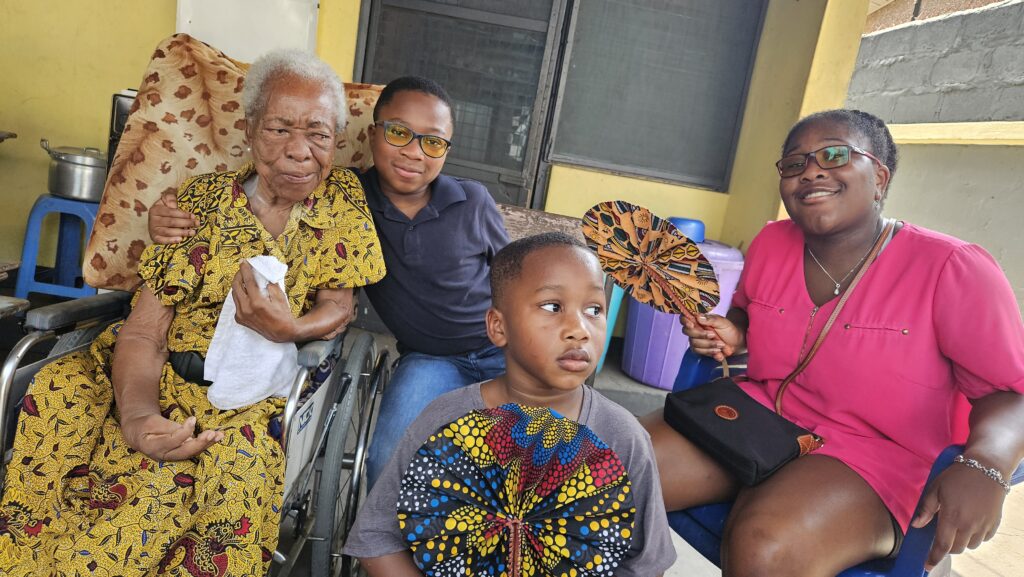
“I’m home, and I don’t need to be anything else.”
This feeling is an important part of how she understands flourishing. It is about being comfortable with who you are and not feeling the need to change yourself to fit into the world around you.
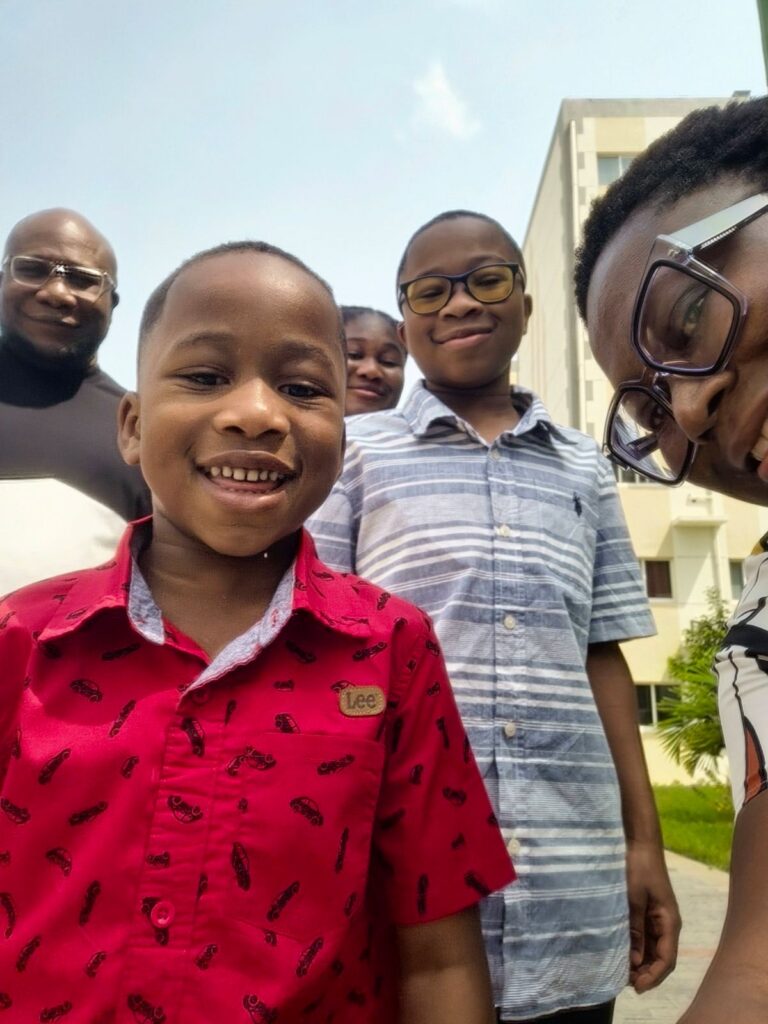
Dr. Dorcoo also connected flourishing to the importance of feeling safe, particularly for children.
“I like to also think about, especially when it comes to the children, where they’re feeling safe enough to be curious.”
When children feel safe and supported, they have the freedom to ask questions, explore their interests, and use their imaginations. They can focus on learning, growing, and enjoying childhood. Her reflections show that flourishing is not just about having access to opportunities; it is also about feeling a sense of belonging and having the freedom to experience life fully.
Navigating Identity as a Black Immigrant
Dr. Dorcoo’s understanding of family and flourishing has also been shaped by her experience moving from Ghana to the United States. Growing up in Ghana, her identity was closely tied to her family, culture, and community. She described how people often knew one another through their family names and relationships within the community.
When she moved to the United States, she experienced a different way of being identified. Rather than being recognized primarily through her family and community connections, she found that her race played a much larger role in how others perceived her.
This shift required her to think differently about her identity and how she navigated the world. Over time, Dr. Dorcoo has come to embrace the different parts of her identity as a Black woman, a Ghanaian immigrant, and a mother. However, she also recognizes that her children’s experiences growing up in the United States are different from her own.
Unlike her childhood in Ghana, where she grew up surrounded by people who looked like her, her children are navigating systems where their race can influence how they are treated. For Dr. Dorcoo, this makes it especially important to help her children understand their cultural roots while supporting them as they develop their own identities. Her story highlights the unique experiences of Black immigrant families, and the ways they navigate different cultures while maintaining connections to their histories and communities.
What Will Flourishing Look Like for Future Generations?
When reflecting on the future of Black families, Dr. Dorcoo emphasized that meaningful change requires us to think beyond the challenges families currently face. She discussed how inequities in education, economic opportunity, immigration, and maternal health continue to affect Black families. She also reflected on the lasting effects of colonialism and how these historical systems have shaped the opportunities available to Black communities. For Dr. Dorcoo, creating a better future means challenging these systems and being willing to imagine something different.
“There needs to be this imagination that goes beyond the limitedness of what contact thought the world should be.”
In this reflection, Dr. Dorcoo uses the word “contact” to refer to colonialism and its lasting effects. She believes that supporting future generations requires changes to the systems that create barriers for Black families. However, she also emphasized the importance of relationships, community, and ensuring that families have opportunities to share their own stories. For Dr. Dorcoo, these stories matter because Black families bring valuable knowledge and experiences that should help shape the decisions and policies affecting their lives.
Dr. Dorcoo also reflected on the ability of Black communities to continue finding beauty and joy despite historical and ongoing injustices. “There’s something about how we see life that always amazes me. How we continue to see and maintain beauty and embrace joy of it all. And sometimes that’s a reminder to me of what flourishing can also look like.”
For future generations, Dorcoo’s story reminds us that Black families should not be defined only by the barriers they face, but by the strengths, traditions, and relationships that have helped them thrive across generations.
Through this family spotlight, we see how flourishing can take shape in everyday moments, from reconnecting with family across the ocean to creating a space where children feel safe enough to dream. Her reflections encourage us to celebrate the richness of Black family life while continuing to imagine and work toward a future where all Black families have the freedom and opportunities to flourish on their own terms.