This blog post from Nema Kebbeh, BA, doctoral student at the University of Houston, and Elizabeth Jelsma, PhD, assistant professor at the University of Houston, reports on findings they presented on behalf of the Ethnicity, Culture, & Health Outcomes (ECHO) Lab at the Society for Research on Adolescence 2026 Biennial Meeting in Toronto, Canada.
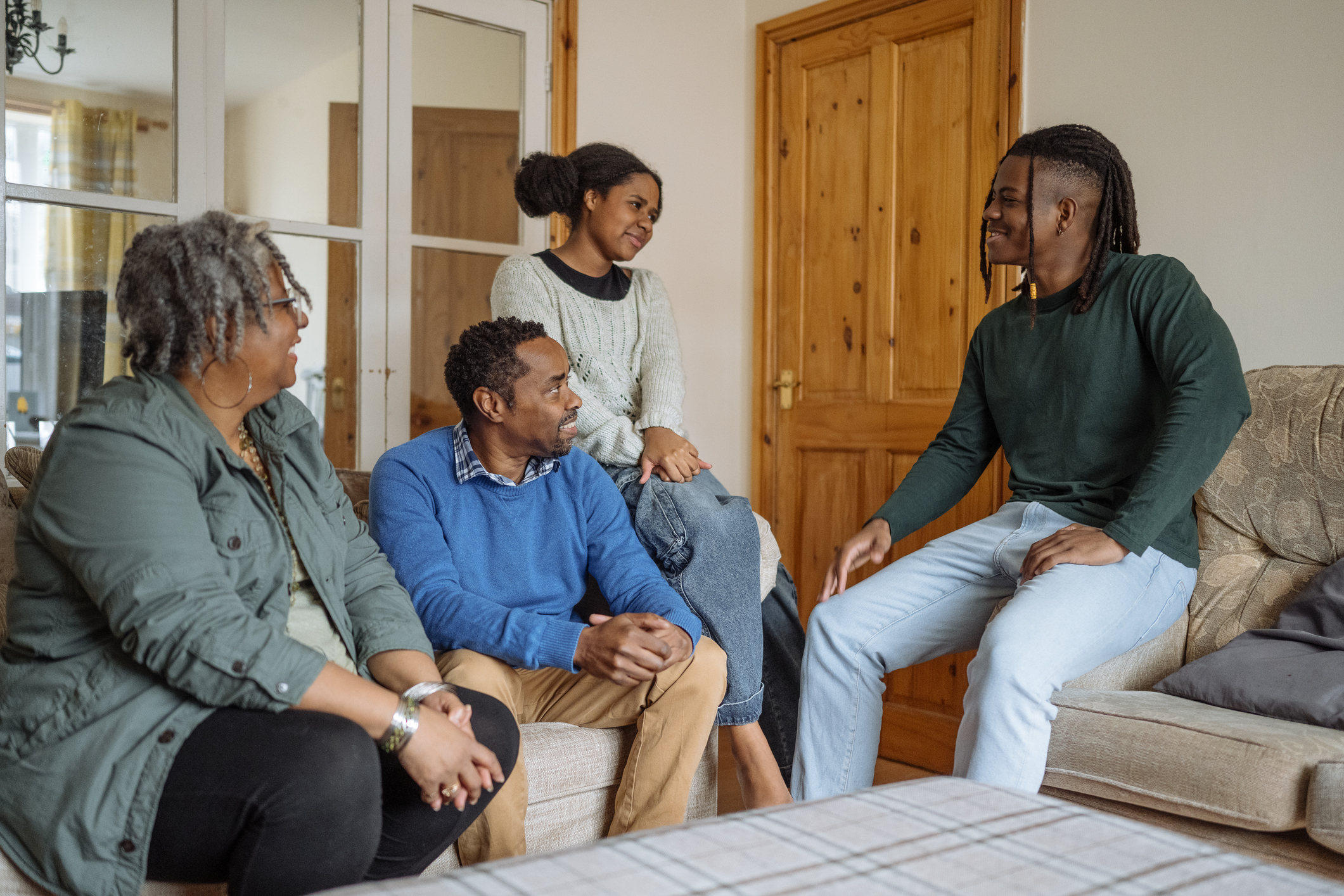
Most studies have examined racial and cultural learning in Black families as a one-way process: parents teach, and teens listen (Bañales et al., 2021; Hughes et al., 2006; Neblett et al., 2012; Umaña‐Taylor & Hill, 2020). In this view, parents pass down cultural values, traditions, and history, and adolescents mainly receive that information.
However, information in Black families is shared both ways. Parents introduce their children to the cultural practices and histories they know, while teens share new conversations they experience at school, online, or with friends. Both parents and teens shape the family’s cultural life. We wanted to find out if these daily cultural conversations, in either direction, affected how parents and teens felt each day.
How We Conducted the Study
We connected with 34 Black parent-teen pairs in Houston. The teens were between 14 and 18 years old. For 14 nights in a row, both parents and teens filled out a short survey on their phones. The surveys asked what the other family member had done with them that day to support racial and ethnic pride, including teaching the history, customs, values, and traditions of their culture—such as talking about cultural history, watching culturally relevant media, attending cultural events, or discussing community issues.
They also completed an adapted short form of the Profile of Mood States, a validated mood measure that helped to capture positive feelings, such as happiness and calm, and negative feelings like sadness, anxiety, and anger.
Because each person filled out their own survey, we captured these cultural conversations from the perspective of the person on the receiving end. We then used the actor-partner interdependence model, an analysis designed for pairs of people (like parents and teens) to examine two questions:
- whether your own view of the cultural conversations you had that day was linked to how you felt, and
- whether the other person’s view of those same conversations was linked to how you felt.
We also divided each daily measure into two parts. One part showed daily changes compared to each person’s usual mood. The other part showed stable patterns over the 14 days.
What We Found
On days when teens said their parent had more cultural conversations with them than usual, parents felt more positive that evening. This effect only went one way. When parents said their teen had more cultural conversations with them, the teens’ moods did not change. The daily mood boost went from teen to parent.
Over the full 14 days, people whose family member often said they engaged in cultural conversations reported feeling more positive and less negative overall. This was true for both parents and teens. Being seen as someone who regularly brings cultural engagement was linked to better emotional well-being over time, no matter the role.
One result was unexpected. People who said they often received these cultural conversations on a few specific and difficult topics, particularly racial inequality, unfair treatment, and community problems, tended to feel slightly more negative overall, regardless of whether they were a parent or a teen. Those who received these conversations most often were likely to also be dealing with more racial stress in their daily lives, which may have been why these talks were happening. This differs from the broader pattern above because it reflects being on the receiving end of heavy, specific conversations rather than the general back and forth of engagement around culture.
What This Means for Mental Health Support and Black Families
Mental health is an important facet of family well-being and mental health professionals are often called on to positively support families. When mental health professionals design programs and initiatives to promote family mental health, they tend to focus on parents. Parents are given resources and seen as the primary people shaping the cultural identity of their children. Our findings suggest that this parent‑centric approach overlooks the active role adolescents play within family systems.
Adolescents meaningfully influence their parents’ emotional well‑being through the cultural conversations, questions, and experiences they bring into the home. Rather than conceptualizing adolescents solely as recipients of socialization, clinicians may benefit from interventions that position teens as active contributors to family processes.
One such example is the Engaging, Managing, and Bonding through Race (EMBRace) program. EMBRace is a five‑session intervention consisting of 90‑minute therapeutic sessions delivered by trained clinicians, with sessions conducted both individually (i.e., parents and adolescents separately) and conjointly (e.g., parent-adolescent dyads). The goals of EMBRace are to equip Black families with tools to engage in bidirectional conversations about race and to foster bonding through enhanced parent-child communication and strengthened parent-child relationships.
If regular cultural engagement at home helps protect against negative feelings, these conversations could be a vital way to support Black adolescents’ mental health. Helping Black families keep these talks going as regular practice could be a valuable part of prevention and resilience. Professionals should recognize that these exchanges are a source of strength even when the topics are difficult.
Next Steps
The learnings from this study provide evidence for what families already do, providing insights that mental health clinicians can build on to support existing communication patterns in Black homes. As we continue with this work, we are partnering with the Black Families Flourishing project team at Child Trends, to increase and diversify our sample and explore more of what is happening in daily conversations in families with children.
This proposed work will enable us to explore the ways that conversations may vary in mono- and inter-racial Black households with adolescents to support family well-being. We also intend to examine the ways that systems (education, health, recreation, spiritual, and others) and policies can play in facilitating or challenging conversations and well-being among Black families.
References
Bañales, J., Hope, E. C., Rowley, S. J., & Cryer‐Coupet, Q. R. (2021). Raising justice‐minded youth: Parental ethnic‐racial and political socialization and Black youth’s critical consciousness. Journal of Social Issues, 77(4), 964–986. https://doi.org/10.1111/josi.12486
Hughes, D., Rodriguez, J., Smith, E. P., Johnson, D. J., Stevenson, H. C., & Spicer, P. (2006). Parents’ ethnic-racial socialization practices: A review of research and directions for future study. Developmental Psychology, 42(5), 747.
Neblett, E. W., Rivas-Drake, D., & Umaña-Taylor, A. J. (2012). The promise of racial and ethnic protective factors in promoting ethnic minority youth development. Child Development Perspectives, 6(3), 295–303.
Umaña‐Taylor, A. J., & Hill, N. E. (2020). Ethnic–Racial Socialization in the Family: A Decade’s advance on precursors and outcomes. Journal of Marriage and Family, 82(1), 244–271. https://doi.org/10.1111/jomf.12622